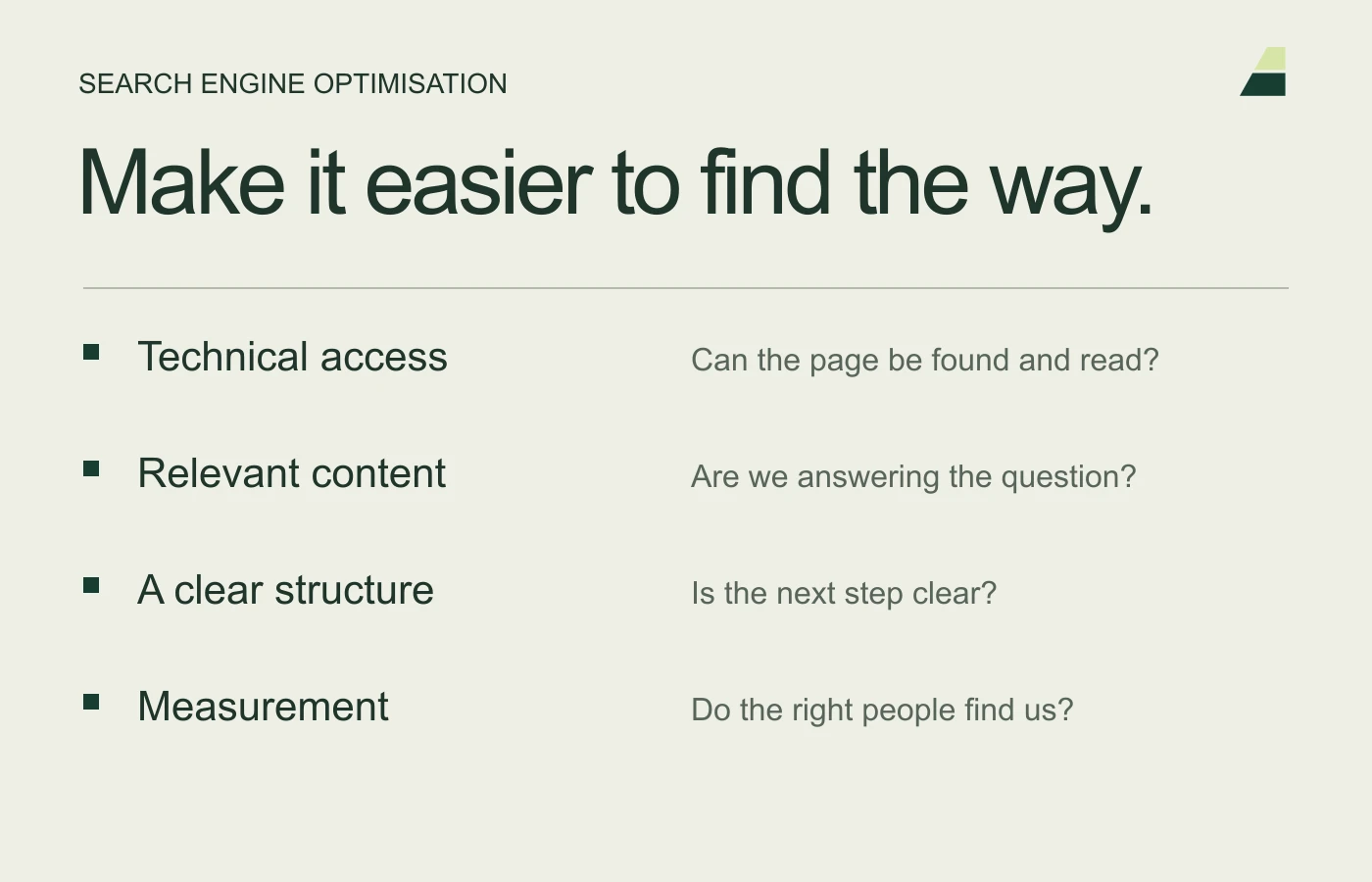
A good business blog answers real customer questions, uses the company’s own knowledge and makes the next step easy. The aim is useful content that stands up to reading and scrutiny, long after publication too.
Not every business needs to publish a new article each week. Before making an editorial calendar, know which questions you want to answer and who can check those answers.
This guide follows the work from idea to follow-up. If you already have a blog, use the same list to update articles that still attract visitors.
This guide brings together our earlier articles on planning, writing and maintaining a business blog. The old addresses redirect to this main guide.
1. Clarify the article’s purpose
Should it explain a technical term, help someone make a choice or show how you solved a problem? Choose one main purpose. This makes both the heading and the content clearer.
A service page should normally explain the offer itself. A blog can answer related questions. If an article and service page answer the same question with almost identical text, consider merging them or giving them clearer roles.
2. Find topics in customer conversations and your own work
Collect questions from proposals, meetings and support. Ask experts what customers often misunderstand. Look for difficult decisions and tasks where you can demonstrate something specific.
A useful topic is often narrower than ‘everything about marketing’. ‘What information do we need before quoting for a new website?’ is easier to answer precisely. A checklist, annotated example or explanation of a common poor choice can offer more than a long list of generic tips.
Case studies should distinguish delivery from measured impact. State periods and definitions for results. Do not use an old customer figure as evidence for a newer project.
3. Research search needs without letting keywords dictate everything
Look at customers’ words and search questions. Search Console can show queries already bringing impressions and clicks. Combine this with actual customer knowledge; a search phrase alone does not explain the whole need.
Read search results to understand what already exists. Then identify what you can add: experience, photos of your work, a clearer explanation or a comparison with documented assumptions. Rewriting the same general advice adds little.
4. Build a structure that answers quickly and explains well
Start with the answer or main point. Use subheadings for questions the reader needs answered, and place key qualifications beside the claims they concern. Long introductions about ‘a world changing faster than ever’ rarely help the reader with their task.
No particular word count suits every topic or produces a specific Google ranking. A simple clarification can be short. A comparison of several options needs more room. Google recommends assessing usefulness and quality rather than writing to a fixed word count. See the guidance on helpful content.
A worksheet: What is the question? What is the answer? When does it apply? Which example makes it understandable? What should the reader do next? This structure works for both a short article and a larger guide.
5. Write a draft and have the facts checked
Let someone who knows the subject explain it in their own words. A writer can structure and simplify, but prices, technical details and experience need a source. Use primary sources for claims about rules, platforms or specifications.
Check dates and distinguish plans from completed events. ‘Planned launch’ and ‘launched’ mean different things. Customer quotes must be real and appropriate to use in context. Private reports and personal information do not belong in a public article.
Finally, read the text aloud. Replace unnecessary jargon, remove repetition and clarify vague references. If it says ‘this produces better results’, explain what ‘this’ and ‘results’ mean.
6. Use tools to support editorial work
A shared document, a short topic list and a responsible expert are often enough to get started. Analytics can show demand and use, while a publishing tool manages versions and content.
AI can help with outlines and editing, but must not invent experience, sources or customer quotes. Check factual claims and add your own knowledge. Explain the process when it helps readers understand or assess the content.
7. Check the title, links and presentation
The title should describe what the article actually answers. The meta description should provide a short, accurate summary. Google may choose different text in the search result; the description is not guaranteed ad copy. See Google’s guidance on snippets.
Link to relevant services, projects and sources where they help readers. Use descriptive link text and check addresses. Images should explain or document something. Describe relevant image content in alt text, and use empty alt text for purely decorative images.
When updating content, useful URLs should normally be kept. A year in the URL is not, by itself, a reason to move the article. Update the text, introduction and review date. See also our SEO guide.
8. Publish, check and maintain
Read the article on mobile and desktop after publication. Check headings, links, images and the content shown to logged-out visitors. Record changes and agree who monitors subject updates.
Track relevant queries and clicks, but also whether readers reach the right service or make contact. High engagement time may mean careful reading, or that something is hard to understand. Use the figures alongside the content and actual feedback.
Prioritise maintaining articles already important to customers. An old trend article can be marked historical and link to an updated guide. It need not receive a new year and pretend to be new.
If you need help choosing topics, writing or revising, read about content production at Færder Marketing and how content forms part of inbound marketing.
See examples of ongoing content work in Bondeguiden and Traktorguiden. In our own venture Basic Matte explanations are connected to practical maths exercises.