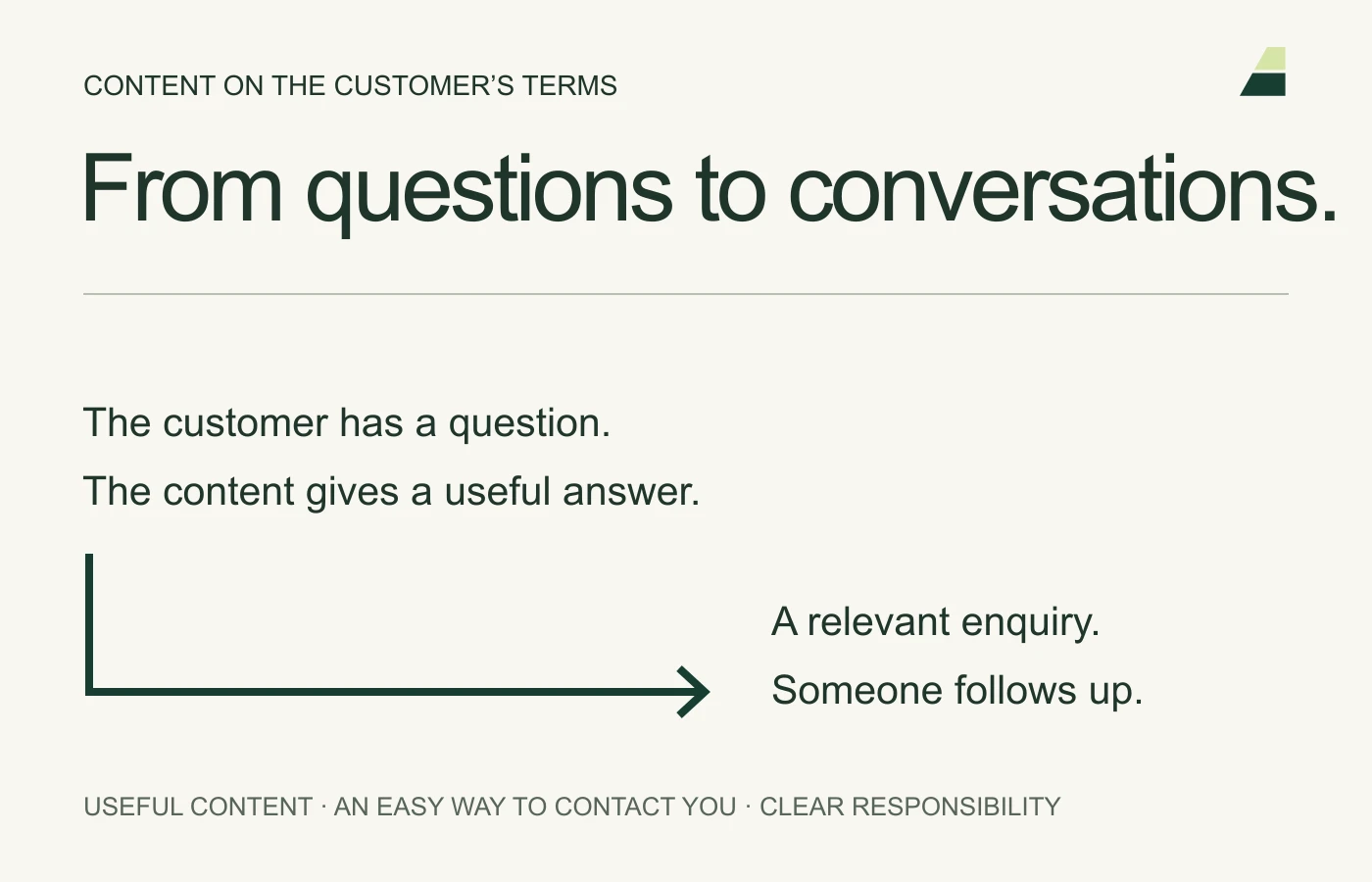
Inbound marketing means helping potential customers with relevant content and useful answers, then following up in a way that fits their needs. It requires good marketing and a clear task for those receiving enquiries.
Someone reading an expert article is not necessarily ready for a sales meeting. Someone requesting a specific quote should not have to go through a long email sequence before receiving a reply. Good inbound marketing makes it easy to find the right information and take a suitable next step.
What does inbound marketing involve?
HubSpot describes the method as attracting, engaging and delighting customers, including the relationship after purchase. This is the provider’s description of the method, not a promise of particular results. See HubSpot’s introduction to inbound marketing.
In practice, the work may include service pages, expert articles, SEO, relevant ads, email follow-up and a system for handling enquiries. Activities should follow customer questions and business capacity.
Inbound and paid advertising can work together. What matters is whether the content and follow-up help the recipient. Ads can distribute a useful guide, while an organic search result can lead directly to an offer.
When does the method fit?
Inbound is particularly relevant when customers need information before deciding, several people participate in the purchase or an expert question can lead to later work. It can also support smaller purchases, but the effort must be proportionate to the value.
If the business mainly needs to fill spare capacity next week, a major content initiative is rarely enough on its own. If few people search for the solution or the audience is very small, direct contact, partnerships or other channels may matter more.
Consider three things before starting: do you have knowledge the audience needs? Can you make it accessible? Do you have someone to follow up the interest? If one part is missing, address it before increasing production.
Step 1: Understand the need and choose a focused objective
Start with actual customers. Ask what triggered the need, which alternatives they considered, what was hard to understand and what made them confident in their choice. An audience description should help you prioritise; it does not need a fictional life story.
Next, choose one area to improve. For a business receiving many incomplete enquiries, the goal might be for more people to specify the type of work and location. For an adviser, it might be more relevant meetings. Define 'relevant' before reporting begins.
Example of our work: Start with one service, one page explaining it, one article answering a common question and one person responsible for follow-up. This is an example of a possible working approach, not a forecast of results.
Step 2: Create content for different questions
Customers may need help understanding a problem, comparing solutions or choosing a provider. These are different tasks. Make clear which one the page addresses.
- Understand: Explain causes, terminology and when to investigate the problem.
- Evaluate: Show the options, limitations and information that affects the decision.
- Act: Explain delivery, document relevant experience and make contact easy.
A useful article can be freely accessible. Putting a form in front of all content creates another barrier, and a download does not automatically indicate buying intent. Use forms when readers receive clear value or actually request follow-up.
Read the business blogging guide for a practical workflow. Google’s guidance on helpful content is also a useful checkpoint for originality and expert value.
Step 3: Connect the content to a natural next step
The onward link should fit the question the article answered. A comparison can point to a relevant service. A project story can show who suits a similar delivery. A contact point should explain what happens after submission.
Check that the form only asks for information needed at this stage. Test delivery and ownership. Do not count a click on Submit as a successful enquiry when submission can fail.
Step 4: Assign an owner to the enquiry
Agree on who replies, what they should clarify and how an enquiry is marked as relevant, answered or closed. Follow-up must match what the person requested. Asking for a quote and subscribing to a newsletter are different things.
A CRM can collect the history, but the working routine matters most. A simple setup used consistently may be more useful than extensive automation without responsible people.
Step 5: Track quality throughout the journey
Distinguish visits, downloads, genuine sales enquiries, qualified enquiries and customers. Job applications, spam and support requests should not automatically count as new sales leads.
Investigate which questions and pages lead to relevant conversations. Also note objections from people who do not buy. Perhaps the content promises too much, explains the price poorly or addresses the wrong need.
Consider the costs of content, distribution and follow-up together. Organic traffic may not have a cost per click, but producing the content still costs money. Compare in a way that suits the decision you need to make.
What can you expect?
There is no fixed growth percentage or universal time to impact. Starting point, demand, competition, offer and execution affect the result. Agree on an initial review period and specific signs of progress without turning them into a sales promise.
We help businesses connect inbound marketing, websites and follow-up. See our case studies for examples of the work involved and documented experience.
Also read how to measure enquiries and website impact, so reporting distinguishes between traffic, contact and qualified enquiries.