LinkedIn may be relevant when a customer’s professional role, industry or responsibilities affect the purchase. It is not automatically right for everyone selling to businesses. You need a useful professional message and a plan to follow up responses.
This guide brings together our earlier articles on channel selection and LinkedIn in inbound marketing. Old user counts and reach promises based on a particular posting frequency have been removed.
Clarify whom you want to help
Describe the decision and the roles around it. A specialist may need practical documentation, while a manager needs to understand risk, pricing and implementation. The same product may therefore need several explanations.
Do not define the audience as ‘all decision-makers’. Choose a need you know well and use customer conversations to find questions worth answering.
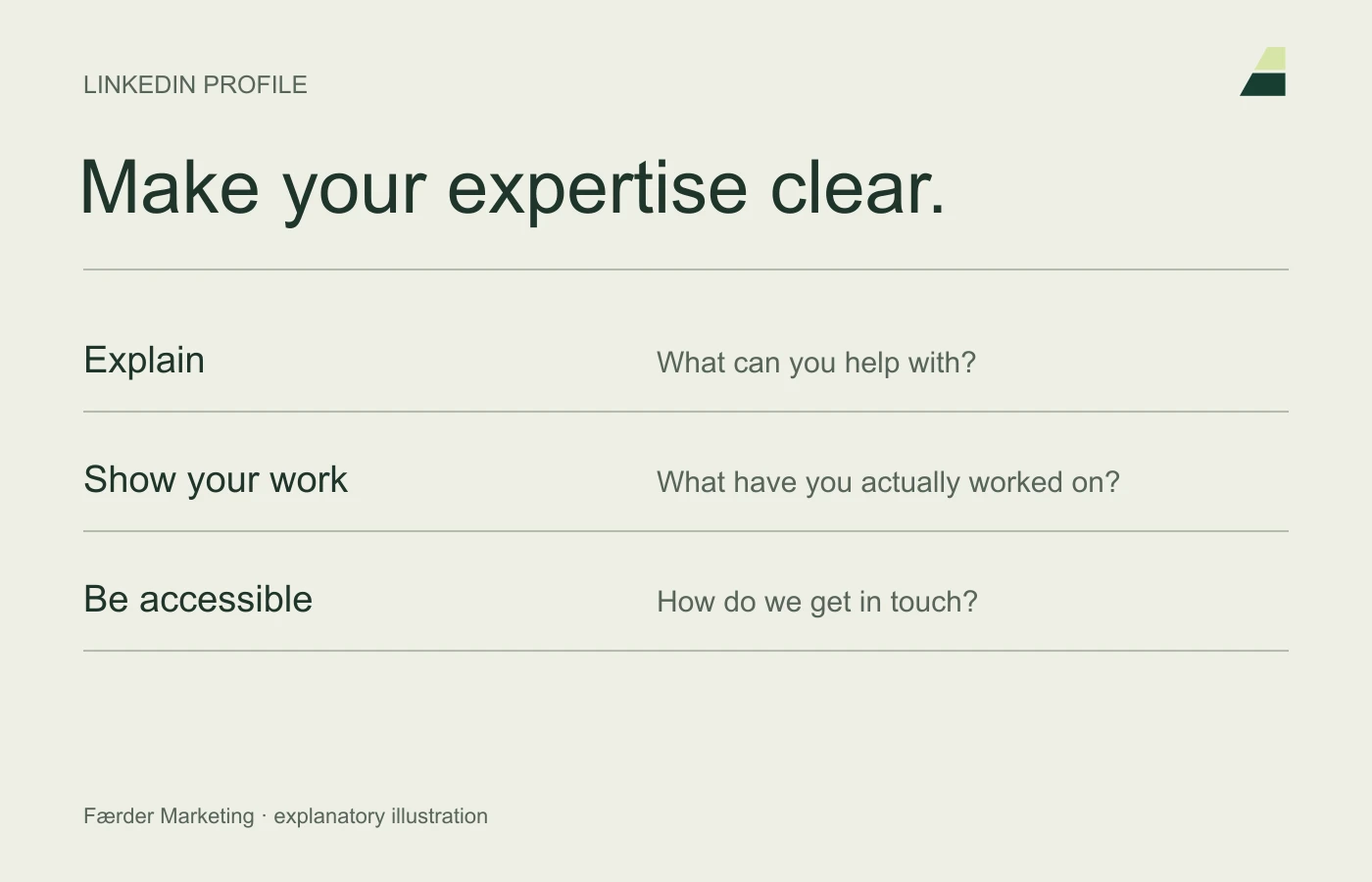
Make profiles and the business page understandable
Personal profiles show who has the expertise; the business page explains the company. Keep roles, offers, links and contact details current. Connect claims to work you can document.
LinkedIn’s own profile guidance describes key parts of a good profile. Use it for support, and read our practical profile review to make content relevant to customers.
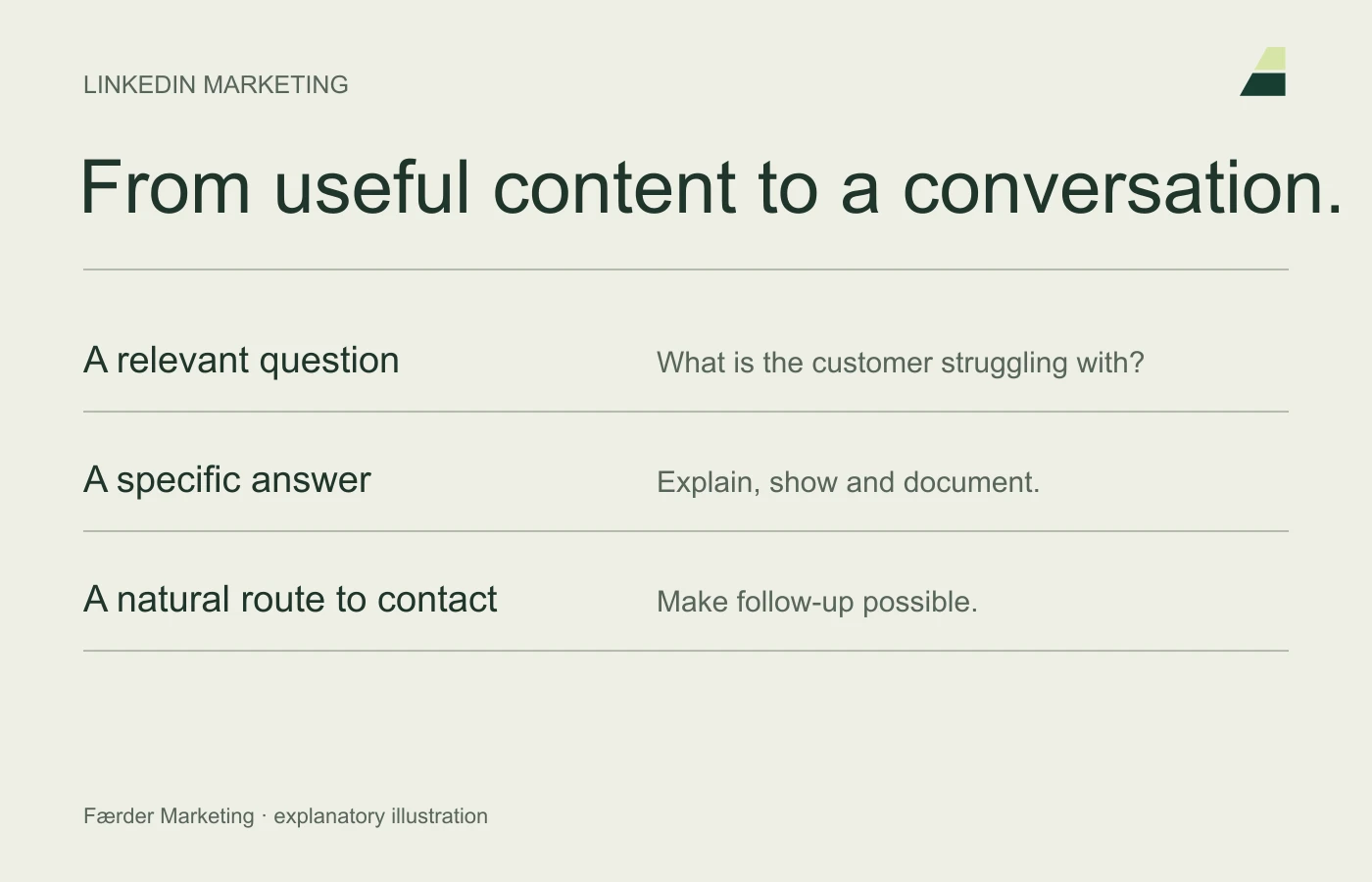
Share assessments that help with the work
A useful post can explain a common poor choice, show a working process or discuss when a solution fits. Describe what you considered and why. Expert reasoning is more interesting than calling every delivery fantastic.
Use real examples with the necessary permissions. Employees who want to participate should receive expert support and room for their own voice. Avoid making their personal profiles a mandatory distribution channel.
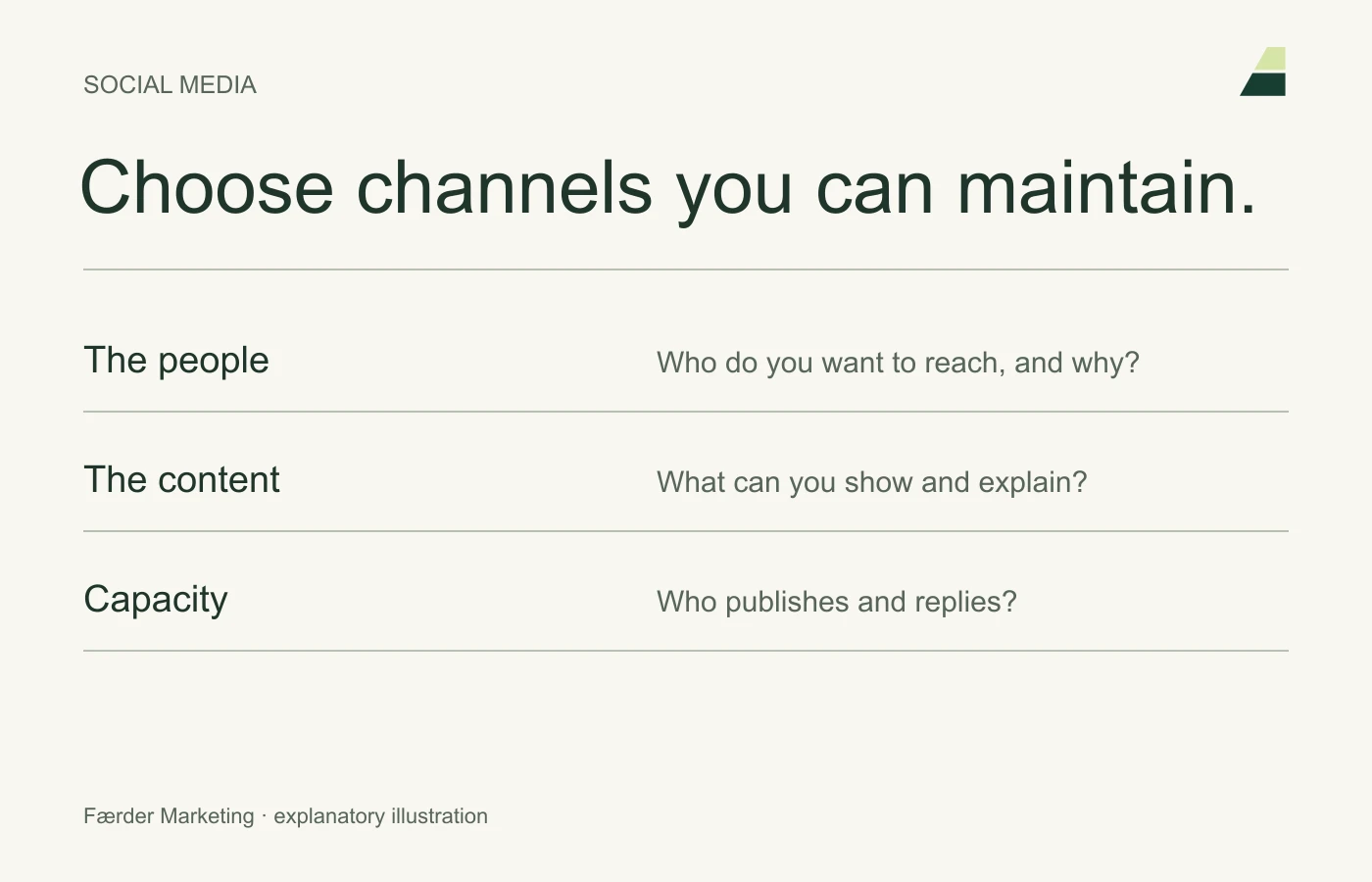
Choose a rhythm you can maintain
Publish when you have something useful to contribute and allow time for the conversation afterwards. No fixed number of posts ensures a particular share of the audience is reached.
Try different topics and formats, noting which produce relevant questions. Reuse good explanations on the website so they remain discoverable and useful in sales conversations.
Use advertising with clear qualification
LinkedIn offers targeting by factors including company, industry and professional role. LinkedIn’s targeting guidance shows the available criteria. Check the account settings and consider whether the audience becomes too small.
Choose an offer that suits the recipient's situation. A download shows interest in the content, not automatically a wish for a sales meeting. Explain what the form entails and who receives the response.
Measure relevant conversations and opportunities
Assess traffic, qualified enquiries and sales over a period that suits the buying process. Likes and followers can indicate interest, but are not sufficient evidence of profitability.
Connect LinkedIn to the content strategy and enquiry handling. You can then learn from customer questions and improve the next post or offer.