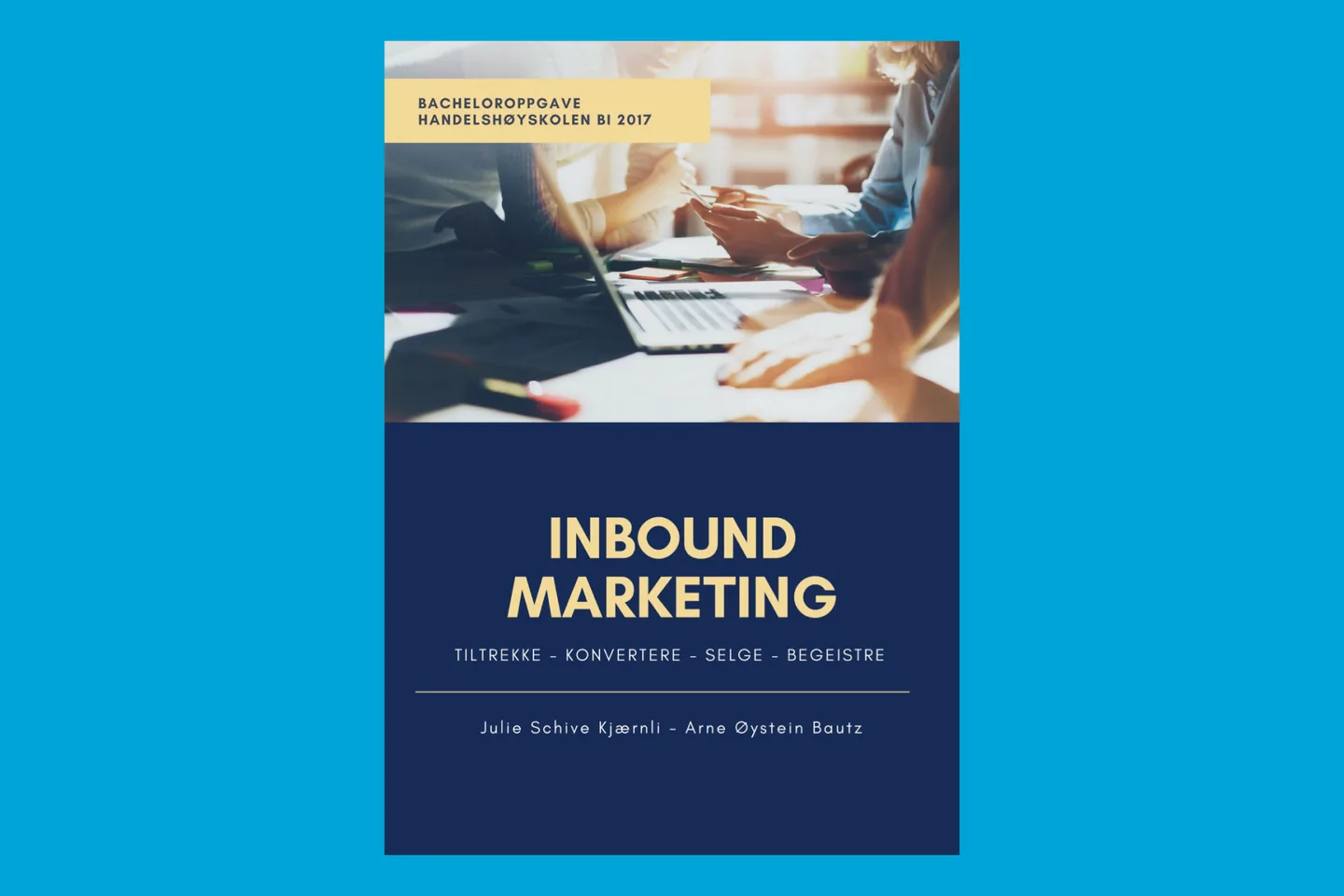
In spring 2017, Julie Schive Kjærnli and Kjetil Fagereng submitted a bachelor's dissertation in marketing management at BI Norwegian Business School, specialising in brand strategy. The dissertation examined how inbound marketing could affect brand equity.
This article was first published in January 2018. It has been edited to distinguish experience from that period from current advice. The study does not establish the effect of inbound marketing for every business or in today’s market.
What did the thesis investigate?
The research question concerned what distinguished inbound marketing from other methods and whether it could contribute to brand value. The work used qualitative interviews with professionals and businesses using the method, alongside external expert sources.
This gives insight into the sample’s experiences and assessments. It is not the same as a representative measure of impact or a controlled experiment isolating cause and effect.
Connections across the customer journey
A central theme in the original article was the connection between expert content, customer questions and follow-up. The interviews pointed to the importance of relevant information for purchases requiring time and consideration.
Read this as an observation from the work in 2017. It is too strong to conclude that one method always suits businesses better, or that customers generally complete most of the buying process before making contact.
Collaboration between marketing and sales
Internal acceptance of change and cooperation between those generating interest and those following up were identified as challenges. These remain useful questions: who owns an enquiry, and how does marketing learn from customer conversations?
The method requires expert contributions and capacity. A tool or publishing plan alone does not settle responsibilities.
What has changed in this article?
The claim that this was Norway’s first and only bachelor’s thesis on inbound marketing has been removed because the article did not substantiate it. Generic impact promises and categorical predictions were also removed. The historical period, authors and main themes remain.
This is a summary of the original work, not a new study. For decisions today, assess your own customers, capacity and measurement.
Read the updated inbound guide for practical advice, or the follow-up guide for the work after interest becomes an enquiry.