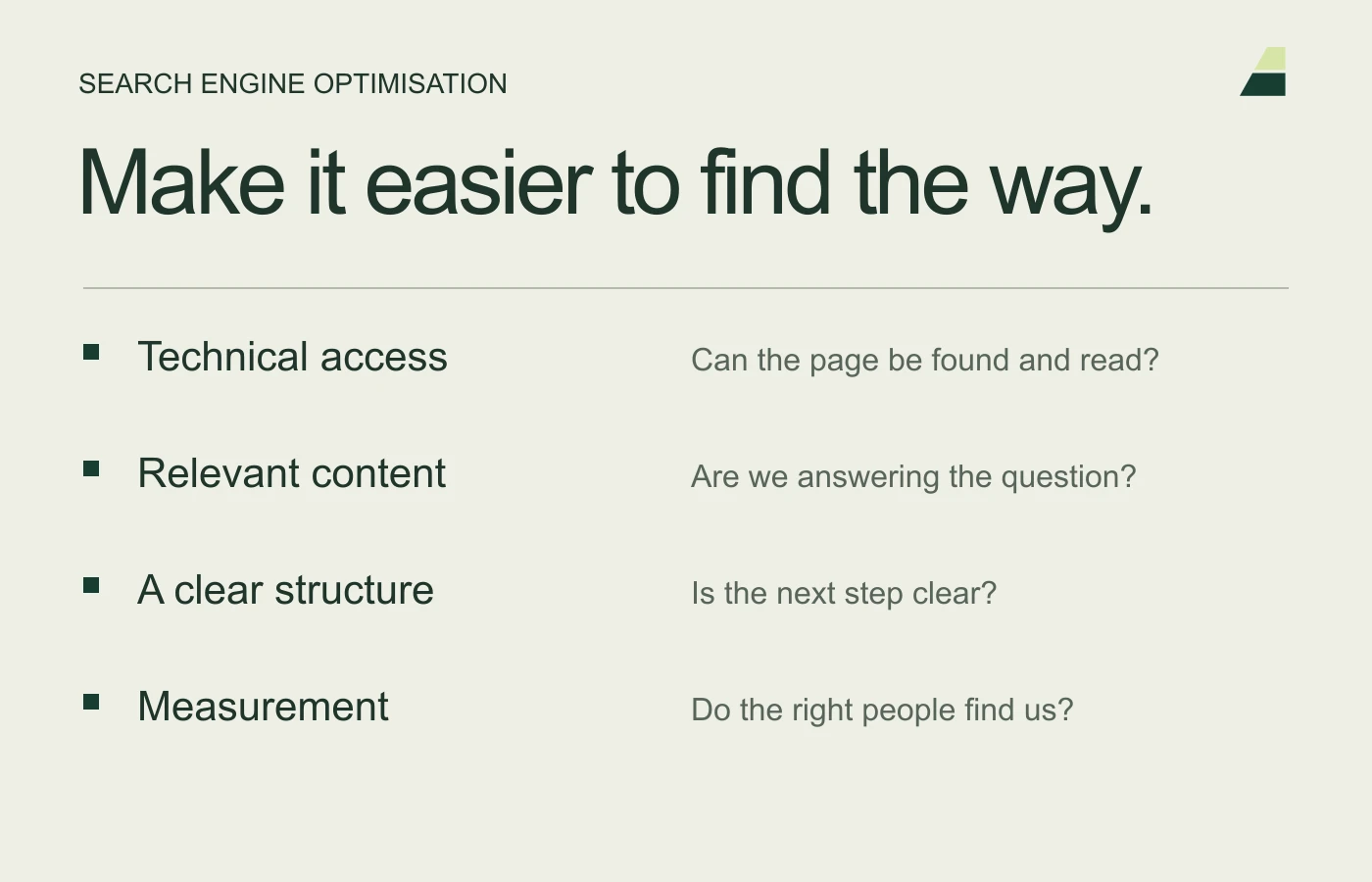
SEO and inbound marketing overlap but are not the same. SEO makes a website accessible, understandable and relevant in organic search. Inbound marketing is broader work to attract interest, help customers evaluate and follow up contact.
An article can therefore be part of both. SEO helps the right reader find it. The rest of the customer journey determines whether the content leads to something useful for the customer and business.
SEO starts with search and the website
The work includes technical accessibility, content, internal links and presentation. Google’s essential requirements describes requirements and recommendations for visibility. Meeting the requirements does not guarantee indexing or a particular ranking.
For a local specialist business, SEO may mean explaining services and coverage areas well. For an online shop, product information, categories and technical structure may be central.
Inbound also covers what happens after the visit
Useful content should offer a natural way forward: more information, a checklist, an enquiry or a purchase. The next step must match the customer’s readiness and the content’s subject.
When someone makes contact, the enquiry needs an owner, clarification and a next step. A good search result helps little if a quote request goes unanswered. Read the inbound guide for the whole journey.
Not every business needs a blog
Start with the pages customers need to understand your offer. A precise service page may matter more than many general blog posts. Articles are useful when they answer distinct questions that need more space.
Connect related content with understandable links. Articles on the same subject can improve navigation, but calling them a topic cluster gives no automatic ranking bonus. Every page should have a clear purpose of its own.
Use different measures for different stages
In search, examine relevant impressions, clicks and discovered pages. On the website, investigate use and contact points. At the receiving end, assess enquiry quality and subsequent sales.
Do not expect one tool to explain every reason for a purchase. Customers may have seen ads, received a recommendation and read several pages before contacting you. Note what you know and what is uncertain.
Prioritise the weakest link
If your pages are good but relevant traffic is low, SEO may be a natural priority. If relevant traffic is high but good enquiries are scarce, also investigate the offer and contact process. If enquiries are plentiful, follow-up may matter most.
Use the strategy guide to choose the next action. The goal is a connected customer journey the business can manage well.