A website is not fully checked just because the homepage looks right. After launch, check that customers can find their way, enquiries reach the right person and content is maintained.
Use this task list to agree on follow-up with your provider and colleagues. The timings are a practical rhythm, not a promise of when search visibility or sales will increase.
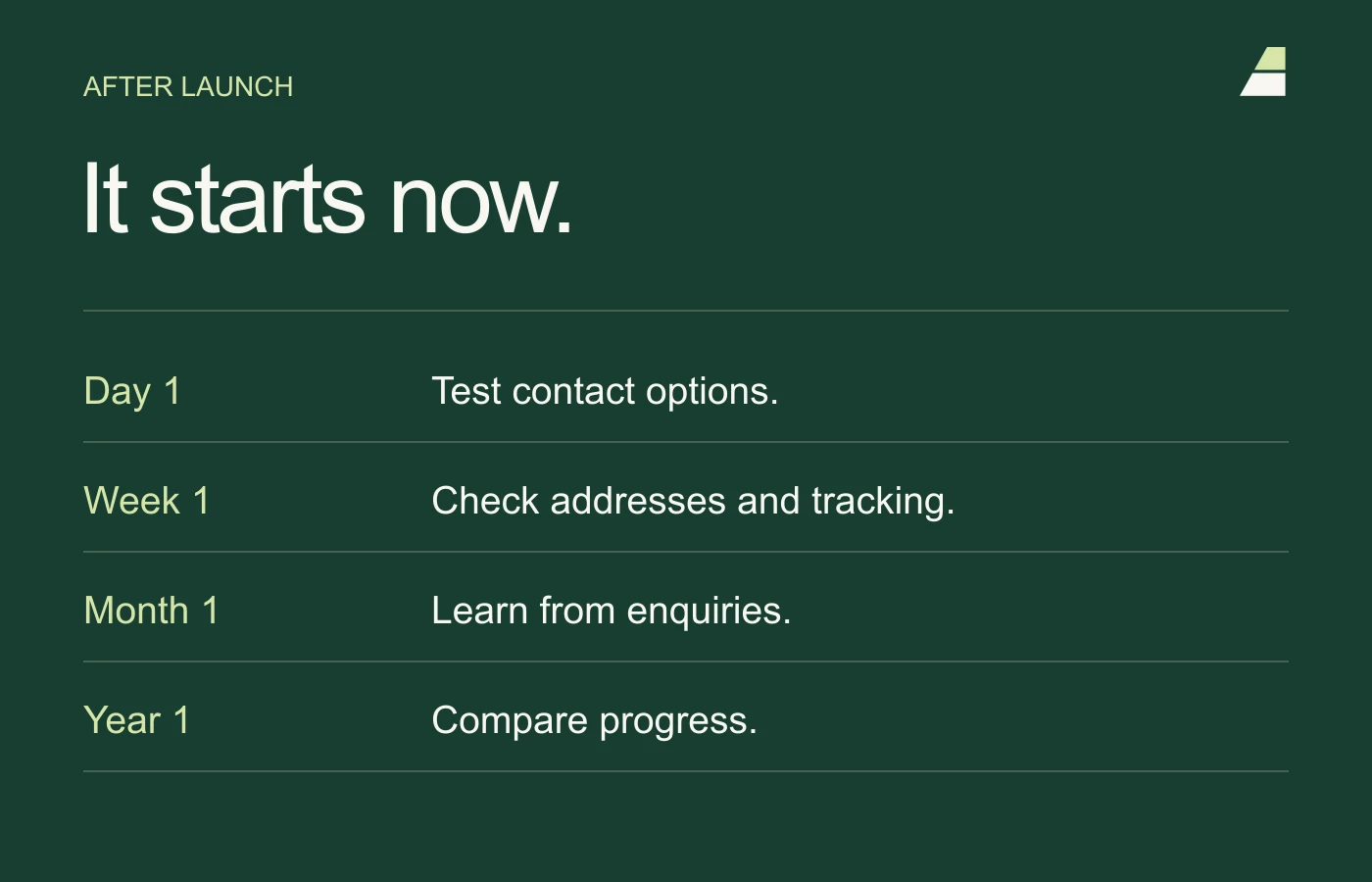
Day one: check what customers need to act
Open the website without logging in, on mobile and desktop. Visit the most important service pages through the menu, an old link and the new homepage. Check that pricing explanations, contact details and buttons are correct.
Test a representative form in an agreed test. Confirm that it reaches the right recipient, that the customer confirmation is understandable and that any attachments arrive. Label the test enquiry so it is not reported as a new customer. A click or green confirmation alone does not test the whole delivery chain.
If the website covers several businesses or locations, check that customers reach the right recipient. the 2025 PEC project shows why structure, service selection and the information in an enquiry need to work together.
First week: check addresses and measurement
Review important old URLs. Each should be preserved or have a relevant permanent redirect. An arbitrary subpage should not end up at the homepage merely because the website is new.
Check that production pages can be indexed, internal links point correctly, and canonicals and sitemaps agree. Previews should remain separate from production. Google’s guidance on site migrations describes several of the checks.
Confirm that analytics measures the correct website without recording duplicate page views. Check key events and note the launch date and setup changes. Consent choices and technical changes can affect how much activity is measured.
First month: use enquiries as feedback
Ask the people who handle calls and forms: do customers understand what you offer? Is information missing that you need to respond? Do they choose the right service? Are they in the area you serve?
Collect specific examples and fix the most important issue first. If many ask about the same limitation, explain it on the service page. If a field is repeatedly misunderstood, change its wording or structure. Small targeted improvements are easier to assess than several large changes at once.
After two to three months: prioritise based on use
See which pages are found, lead onwards and contribute to relevant enquiries. Check quantity and quality. A new guide may help even if contact comes later; a popular article may also attract people the business cannot help.
Choose one concrete improvement for each priority page and record the date. This might be a clearer price explanation, stronger project evidence or an easier way to get in touch. Let the need determine whether the solution requires new content, changed navigation or a different offer.
Agree on who keeps the content accurate
Every important page should have an owner. Agree on what triggers a new review: a changed price, product, service, contact person or expert source. A calendar reminder can help, but updates should also happen when the information itself changes.
Traktorguiden illustrates the need to maintain connections between articles, model information and sources. In Basic Matte the journey from explanation to relevant practice must also work. A typical business website has fewer parts but needs the same responsibility for aligning content and function.
After one year: review the whole picture
Consider two complete twelve-month periods when seasonality matters, and examine the months behind the total. Include traffic, relevant enquiries and factors affecting the comparison, such as advertising and measurement changes.
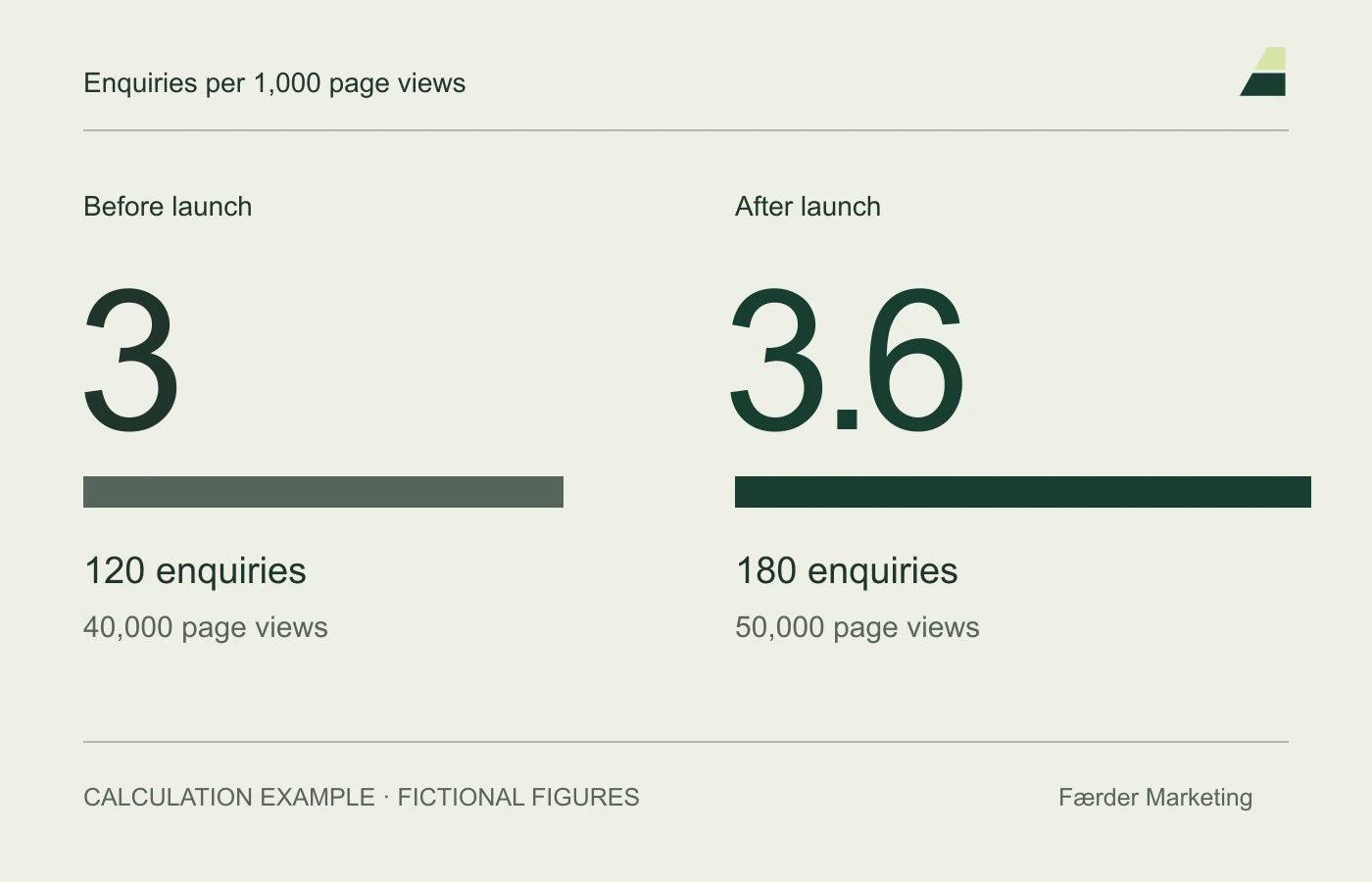
Use the guide to measuring website impact for definitions and worked examples. If you need help with follow-up, you can contact Færder Marketing.