Social media ads often reach people who are busy doing something else. The message must make the need understandable and give them a reason to stop. The page or form must then deliver what the ad promises.
Start with one offer and a specific task. Building awareness, selling a product and generating a project enquiry are different goals requiring different ads and measurement.
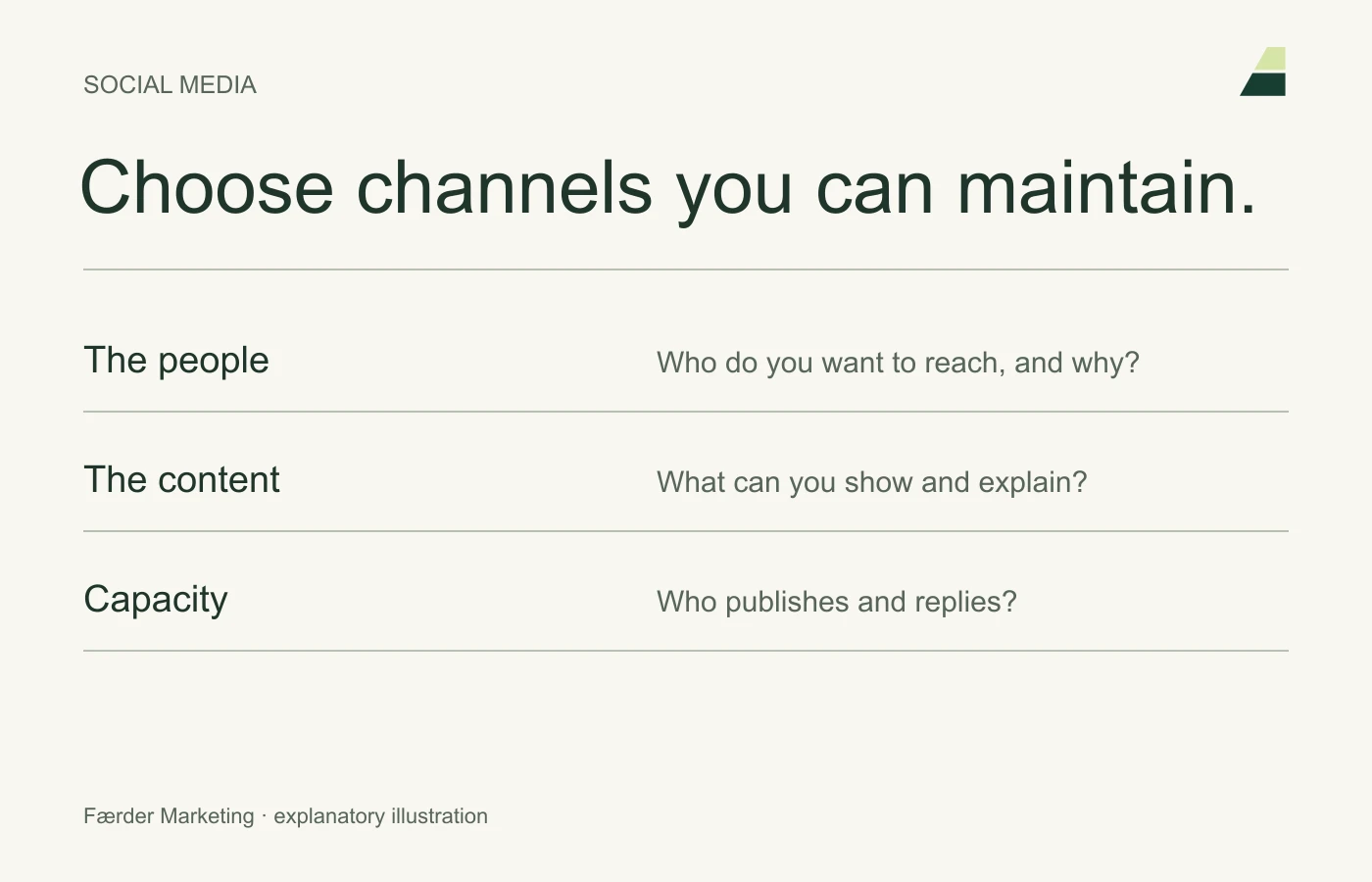
Choose a channel based on the need and available materials
Facebook and Instagram can show offers, products and work. LinkedIn may suit purchases where professional role and company matter. Snapchat can fit when the audience and visual approach work with its formats. No channel is automatically right because it has many users.
Look at your customers and the task before setting a budget. The channel selection guide provides a structure for the assessment.
Choose what the campaign should optimise for
The platform needs a goal resembling your desired result. Traffic is not the same as a purchase or relevant enquiry. Prefilled forms can reduce friction, but people must still understand what they are requesting.
Snapchat describes, for example, different advertising objectives. The planning principle is to define the desired result first, then choose an available setup.
Test different explanations, not just colours
Create a few clear hypotheses: a demonstration, a problem explanation or a specific delivery example. Keep the offer recognisable while exploring different reasons to choose you.
Use real images with established rights. Visual content must suit the placement; Meta highlights vertical video and space for interface elements in Reels. Preview all placements before publishing and add video captions where they help understanding.
Check the whole route to the recipient
Click the ad on a phone. Read the page without prior knowledge, submit a test and check the confirmation. Does the right information reach the right person? Can the customer understand what happens next? Can mistakes be corrected without losing everything entered?
Also check the consent setup before enabling advertising tracking. A banner alone does not show whether tags and integrations respect the visitor's choice.
Assess quality before scaling
Compare costs, relevant enquiries and subsequent sales. Do not choose a winner solely for its high CTR. A more precise ad may get fewer clicks and better enquiries.
Document what you change and why. Avoid changing audience, message, page and bids at once if you want to understand what mattered. Small datasets carry substantial uncertainty; a difference is not automatically a stable pattern.
Also read about pricing and budget and how enquiries are followed up. Advertising becomes easier to manage when quality is visible throughout the journey.