Instagram can quickly show customers what a business does and what its work looks like. A profile should therefore do more than collect attractive images. It should help visitors understand the offer and find a natural next step.
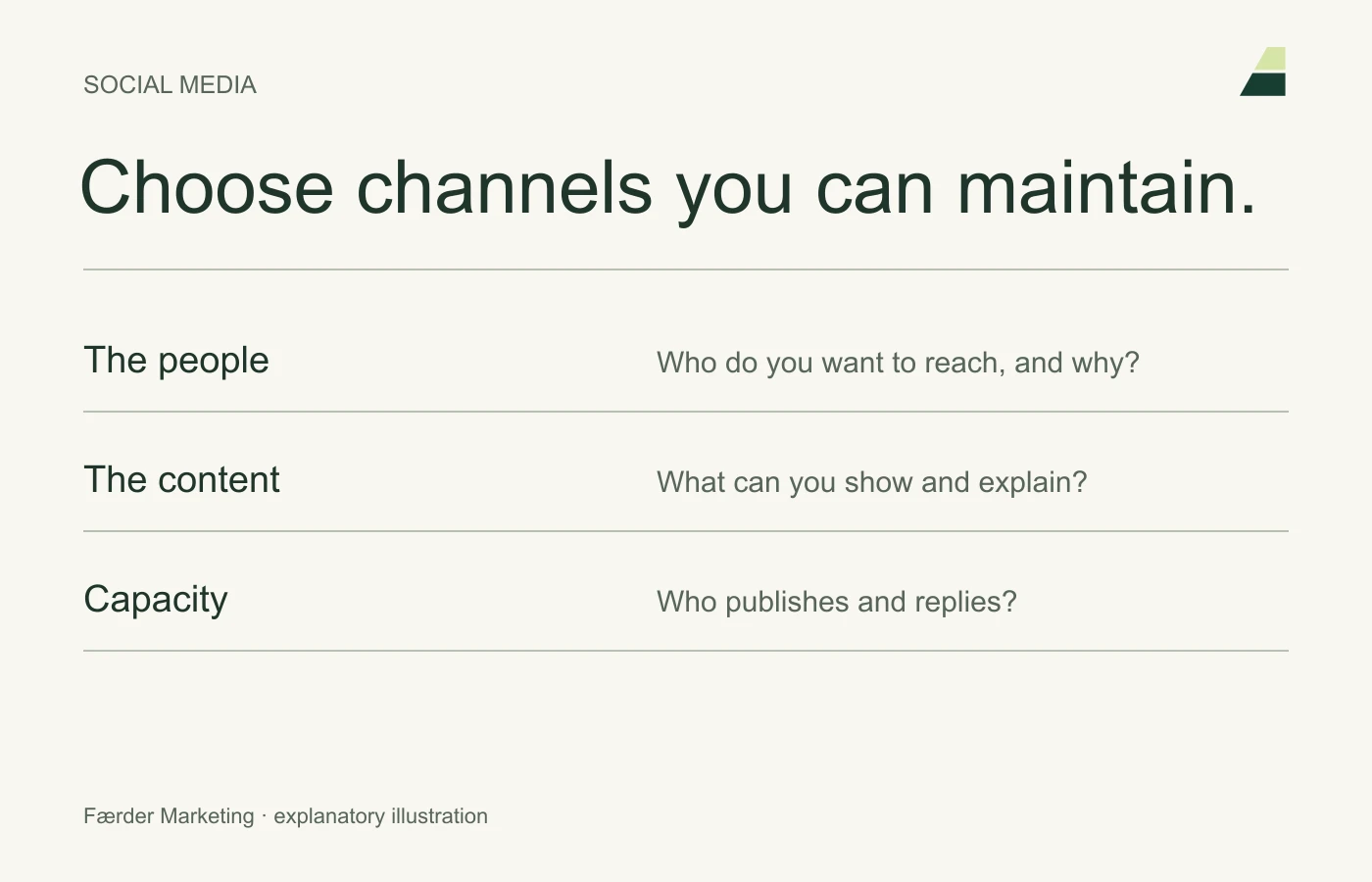
Start with what you can actually show and follow up. A useful expert explanation or a real example can be more valuable than imitating a style that does not fit the business.
Make the profile clear
Use a recognisable name and profile image. Describe whom you help, what you deliver and where you work. Check the profile link on mobile: does the customer reach a relevant page, and is contact information easy to find?
Choose the account type and access setup according to the business's needs. Do not make one personal login the only route to an important company account. Document responsibilities and access.
Create content around real questions
Find a few topics you can contribute to over time: work in practice, customer decisions, common questions and the people behind delivery. For an online shop, that may mean use, sizing, materials and delivery. For a specialist business, it may mean processes and decisions before starting.
Use images with established usage rights. Review content showing customers or employees before publication. AI illustrations should not be presented as photos of work you have done.
Match the format to the explanation
A series of images can show several steps. A short video can demonstrate a movement or process. Stories can provide regular glimpses and answers. Choose a format because it explains better, not because everything must be video.
Meta describes separate ranking systems for Feed, Stories and Reels. There is therefore little basis for universal reach promises based on a particular length, frequency or hashtag formula.
Write so the customer understands the point
Give images context in captions. Explain what we see, why it matters and what the customer can do next. Use technical terms when necessary, but explain them where the audience needs it.
Hashtags can form part of the description, but they do not replace a clear topic or useful content. Avoid irrelevant tags and growth tricks that undermine credibility.
Plan for responses too
Set aside time for questions and messages. Decide when an enquiry should move to email, a phone call or a suitable form. Do not ask people to share private information in public comments.
A content plan should leave room for real events and expert contributions. A completed calendar is a tool, not an obligation to publish something that has become inaccurate or irrelevant.
Measure according to the task
Assess relevant profile visits, website traffic, conversations and enquiries. Followers and likes indicate attention, but not sales value on their own. Note which posts customers actually mention or use.
If you want to use paid distribution, read six steps for Instagram advertising. Keep the goals for organic content and advertising clear so you assess the right result.